




A Full Gamified Treasure-Hunt Game live in 2 Days.
This is the record of Tokyo Mystery, nomarz’s own product. Since launch, AI runs its operations and social media too. Every number is measured from the git history and the AI session logs.
Open tokyomystery.com (external site, opens in a new tab)Key numbers
-
36 hours
From first instruction to live
-
125
AI agents started
-
430 K lines
Of code and tests
-
1,600 dollars
AI usage at API list price
From hour 0 to hour 64
-
Oct 4, 0:26 0 h
The spec is handed over
-
Oct 4, 22:19 22 h
First commit
-
Oct 5, 12:34 36 h
First live release
-
Oct 6, 16:14 64 h
Last build
-
Oct 8
Own domain
A treasure hunt you solve by walking the streets of Tokyo
-
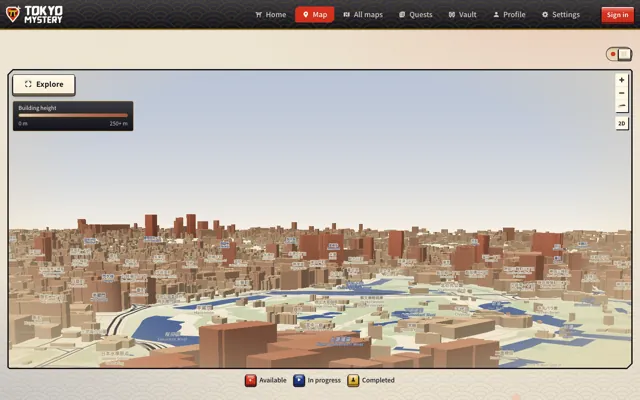
Tokyo in 3D -
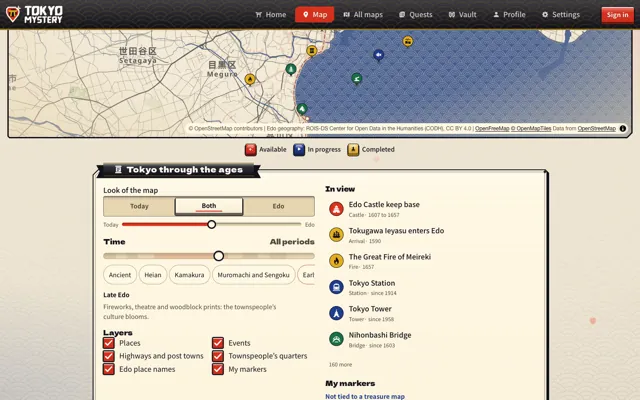
Edo laid over today’s city -
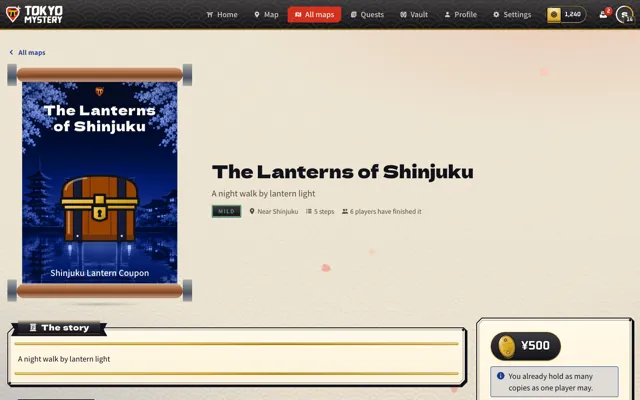
A treasure scroll for each map -
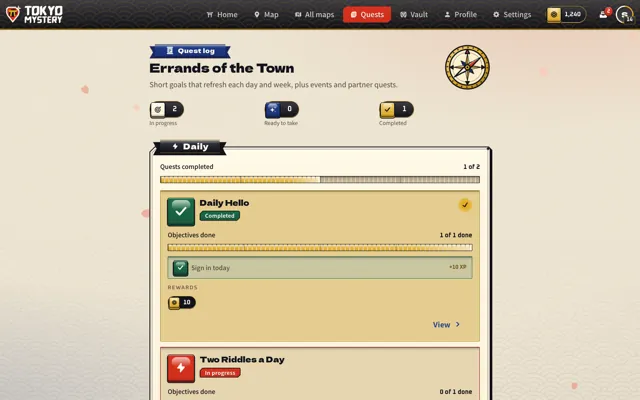
Daily quests


The screens are from the test environment.
People decided. AI built it in parallel.
-
Decide
A person writes one spec.
-
Divide
AI lays the base and sets each area.
-
Build
Agents build and test, each in its own area.
- Lead
- Build and research 62
- Knowledge keeper 53
- Shared work 5
- Advice (design and review) 3
- Back end 2
AI agent
About 430,000 lines of code and about 4,000 tests
- Go 178,065 lines
- TypeScript 127,107 lines
- Svelte 101,968 lines
- Other 26,148 lines
- 1,212 Go tests
- 2,750 Front-end tests (approx.)
- 16 End-to-end test files
- 43 Database migrations
- 17 API documents
Every agent worked from the same memory
-
542 recalls
Memory
Short facts and decisions, each with its evidence.
-
221 searches
Documents
The right passage from specs and procedures.
-
Read
Look up memory and documents before starting.
-
Build
Check what was found against the code.
-
Report
Attach what was learned to the report.
-
Write back
The knowledge keeper updates the record.
Since launch, a bot runs it

Grok AI agent
Social media
-
Receives the assets
-
Asks a person for the rules
Person -
Makes and publishes posts
Admin console
-
Drafts a map
-
Publish check
-
Test play
-
Owner approves
Person -
Live
Assets handed to the bot
- 162 screens
- 89 artworks
- 21 logos
- 5 videos
Can
- Draft maps, quests and themes
- Support players
- Edit prizes and partner shops
Asks a person first
- Publishing and scheduling
- Grants and codes
- Revealing riddle answers
- Deleting
Cannot
- Orders, refunds, ledger
- Admins and settings
- Audit log
Results so far
[What the bot has actually done: number of posts, map drafts created, and so on]
The AI usage came to about $1,600
About 1,500–1,700 dollars
- Re-reading context already loaded 1,031 USD
- Writing context 369 USD
- What the AI wrote 86 USD
- Extra if written context is kept longer +221 USD
This is the three-day build at API list prices. What you actually pay depends on your plan. Server and domain costs and people’s time are not included.
Where it stands
-
Live
Live at tokyomystery.com (checked October 12, 2026).
-
Payments and maps
As of October 8, payments ran in test mode and the one map was a test map.
-
The bot’s guides
Written from the documents and code; as of October 8 they had not been checked by clicking through the screens.
-
Analytics
As of October 8, the analytics store was not yet on the server.
How we measured
- Time
- The first instruction is the first record in the AI session logs (Oct 4, 0:26). The first release is the first release run (Oct 5, 12:34). The end is the last commit of Oct 6 (16:14).
- Lines
- Lines in the Go, TypeScript, Svelte, SQL, CSS and JavaScript files tracked by git, tests included, Markdown excluded. About 430,000.
- Tests
- Go: the number of functions whose name starts with Test (1,212). Front end: the number of it and test calls across 256 test files (about 2,750), an estimate.
- Agents
- From the session logs: 125 agent starts and 77 follow-up instructions. Knowledge base: 542 memory recalls and 221 document searches.
- Cost
- The token counts of 20,379 responses in the logs, multiplied by API list prices (per million tokens: Opus 5.5 $4 input and $20 output, Sonnet 5.5 $2 and $10, cache reads $0.20). Cache writes are given as a range, at 1.25× and 2× the input price.
- Assets
- The assets handed to the bot are the file counts of the marketing asset folder (162 screens, 89 artworks, 21 logos, 5 videos).
Zero to one, then run it all with agents
-
Decide
A person sets what to build and where approval is needed.
-
Build
Agents build in parallel.
-
Launch
A person approves the last call.
-
Operate
A bot runs it every day, within its permissions.
-
Learn
What is learned is kept for next time.